
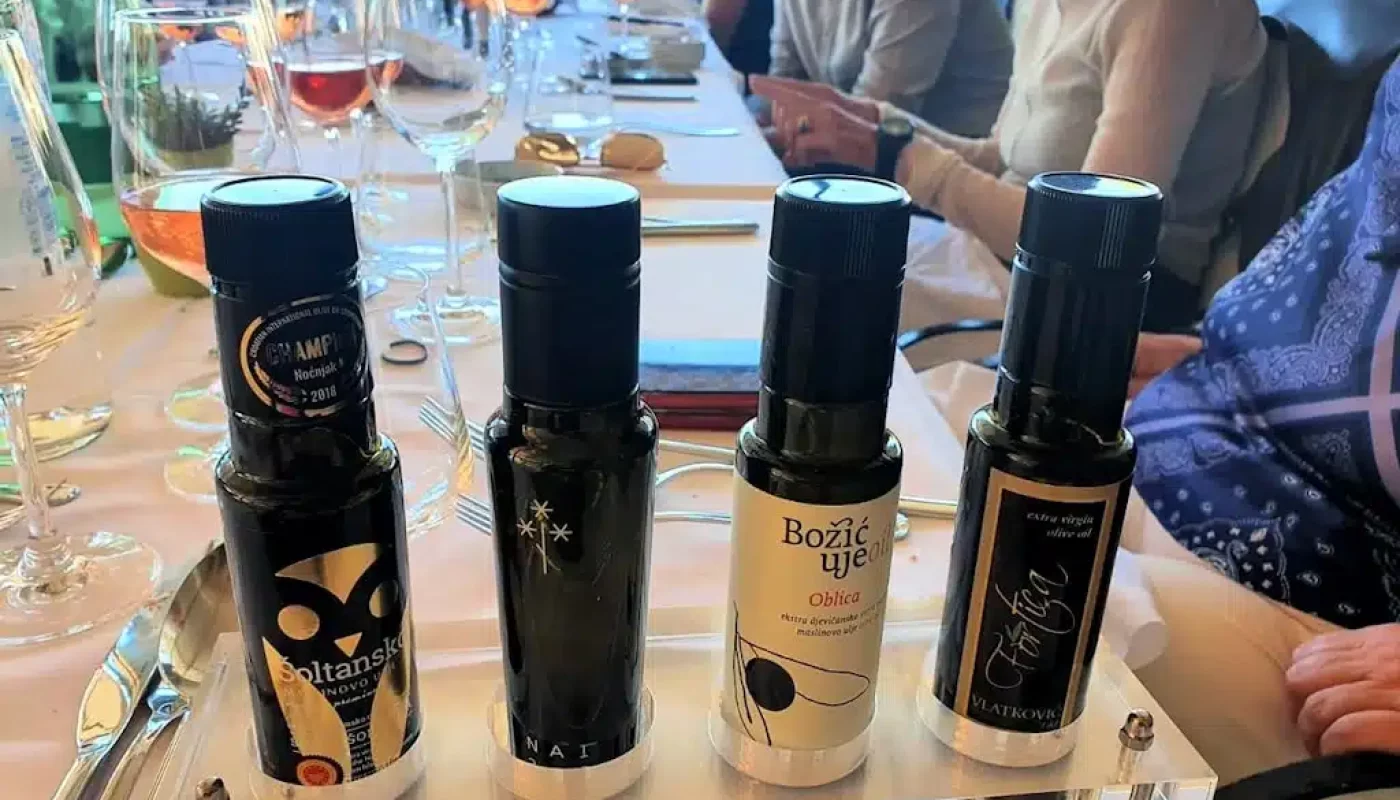
Wine as a Mirror: The Lesson EVOO Must Learn
On the occasion of the launch of the 2025/2026 harvest, Agustín Santolaya, general manager of Aubocassa and one of the founding partners of the association, provides a snapshot of the high-end olive oil sector and clearly points out what the ultimate turning point will be: the big change will come when restaurants can charge for EVOO, at which point it will cease to be a production cost and become a source of profit, exactly as happened with wine.
? Exclusive offer direct from the mill!
Buy Extra Virgin Olive Oil from Spain
Take advantage of the best price on your online order with top-quality premium Jaén EVOO, a juice made from selected olives with an exceptional gourmet profile.
Buy Oro del Desierto Organic Lechin 3L Tin Extra Virgin from Spain at the Best Price!
From the Oil Mill to Fine Dining: 20 Years of Transformation
In Mallorca, where Aubocassa has been producing oil since 1998, there were barely two brands at the beginning; today, 377 are registered on the island, 251 of them under a Designation of Origin. But beyond the numbers, what has changed is the mindset: the criteria of viticulture and oenology have been transferred to the olive oil world, turning what was once an oil mill with serious hygiene issues into an impeccable environment.
The comparison with wine is constant and deliberate. Santolaya, who also manages Bodegas Roda in La Rioja, knows both worlds well and emphasizes that oil and wine still have nothing in common, and much work lies ahead. The hardest factor to overcome is cultural: to produce a single liter of Arbequina oil, about eight and a half kilos of olives are used—around six thousand pieces—a difference in value that is difficult to convey due to decades of counterculture. For years, even refined oil was called “pure olive oil,” and that deadweight remains present in the consumer’s imagination.
Olive Oil Menus in Hospitality: The New Model to Revalue EVOO
The model proposed by Santolaya is as simple as it is revolutionary: that restaurants offer a small oil menu—three or four varieties—and charge for them just as they do with wine. Today, artisanal bread is already charged; if restaurateurs can offer different olive oil varieties and bill for them, the model will change completely. Until that happens, quality EVOO will remain an invisible expense that weighs down the producing sector’s profitability.
Curiously, resistance comes from where it is least expected. Even in Michelin-starred restaurants, if the chef has a personal harvest on their estate—even if it is of lower quality—they stop buying external oil due to a misplaced emotional attachment. With wine, no restaurant would list a mediocre bottle simply because a relative made it, but with olive oil, that ancestral habit persists.
EVOO in Restaurants: Changing the Customer’s Mindset
The challenge does not lie solely with the hospitality industry. People have no hesitation in spending money on wine, but find it expensive to pay 20 euros for a half-liter bottle of oil that was extremely costly to produce; yet, that same amount is spent on a trendy gin and tonic without question. This paradox illustrates the extent to which high-end EVOO is still struggling to occupy its rightful place in the consumer value scale.
? Looking for an authentic EVOO, rich in natural antioxidants for your health? Direct from the mill to your table.

In short, the future of quality EVOO depends on conquering the restaurant table not as a gesture of free hospitality, but as a product with a name, origin, and price tag: the exact same leap that wine made decades ago.