
The Negev Desert’s Agricultural Miracle: Innovation and Irrigation in Arid Zones
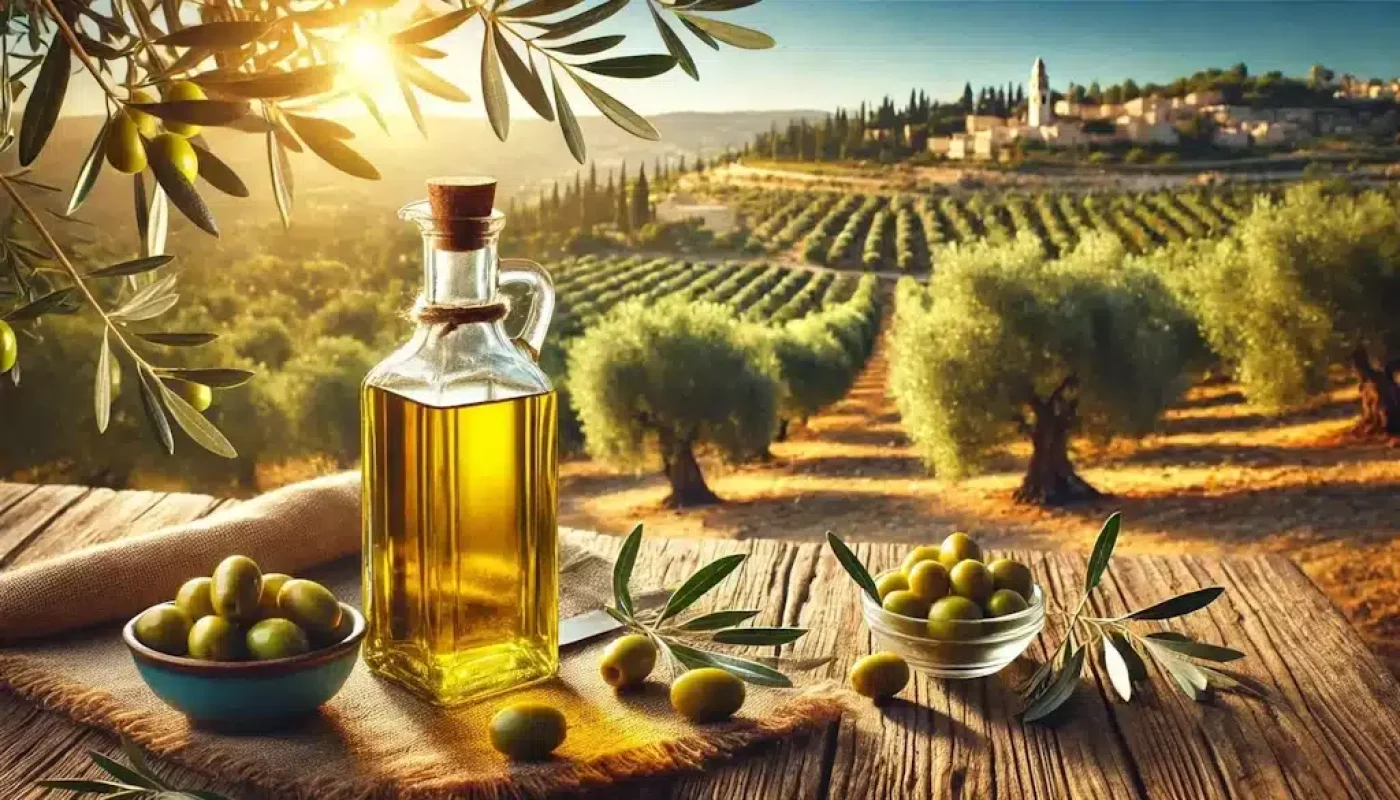
Israel’s olive oil production project at Kibbutz Sde Boker represents a modern, sustainable reinterpretation of David Ben-Gurion’s historic vision to make the Negev Desert bloom, transforming a seemingly hostile environment of sand and stones into an oasis of high-precision regenerative agriculture.
Under the direction of agronomist Yizhar Tugendhaft, this enclave located at an altitude of 500 meters in the southern hills has overcome water crises and ecological challenges through a radical transition toward organic methods, replacing brackish water with recycled water and employing flocks of sheep for natural weed control instead of chemical herbicides.
? Direct discount from the oil mill!
Buy Extra Virgin Olive Oil from Spain
Save on your online purchase with the best quality-price ratio in premium spanish EVOO, an elixir of intense nuances and incomparable gourmet character.
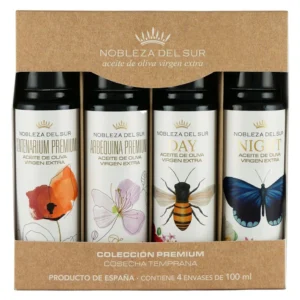
Buy Extra Virgin Olive Oil Nobleza del Sur Premium Gourmet Sampler Gift Set at the Best Price!
The Israeli olive oil produced in this region stands out for its unique character and desert “terroir,” as the absence of rain allows total control over irrigation and, consequently, over the quality and sensory profile of the olives. This results in varieties such as Arbequina, with its fruity and floral notes, the robust and structured Picual, or Coratina, known for its intense bitterness and health benefits.
Despite current economic difficulties stemming from the drop in tourism, the project continues to expand with the planting of new hectares and a firm commitment to the circular economy and carbon footprint reduction, proving that Israeli olive oil is not only an excellent gastronomic product, but also a symbol of scientific resilience and ecological commitment that manages to extract life from the dust.
This joint initiative, which has featured collaboration among Israeli, Palestinian, and German researchers, underscores agricultural technology’s capacity to heal the soil and create a sustainable system where technical precision joins the patience required to understand the arid ecosystem, consolidating Israeli olive oil as a benchmark of innovation that transforms the Negev’s aridity into a source of health and vitality.
How Was the EVOO Industry Born in Ancient Israel?
Archaeology shows that the manufacturing of this liquid gold evolved remarkably over time. During the Bronze Age (3700–1200 BCE), the extraction of olive juice was carried out using very elemental and artisanal processes. However, by the Iron Age (1200–586 BCE), the method was drastically refined into a mechanized, mass-production system.
The most widespread technique in this period was the lever-and-weights press. The oldest archaeological remains of this mechanism, dating back to the 13th century BCE, were found in Lachish. Later, in the 11th century BCE, more sophisticated versions emerged in Megiddo and Tel Dan. The process consisted of crushing the olives in a central bowl with a stone roller. The resulting mash was placed in woven baskets that were stacked and pressed with a large wooden beam, using stone weights to maximize force. Finally, after allowing the liquid to settle, the pure olive oil was separated from the wastewater, skimmed from the surface, and stored in jars for transport.
Israeli EVOO: What Impact Did This Trade Have on the Biblical Economy?
Archaeological excavations reflect that the product of the olive tree was not only a daily food and an indispensable element for religious rituals or offerings in the tabernacle, but also the engine of immense financial prosperity. During the 10th century BCE, under the reign of David, production was already regulated by a centralized administration.
The true industrial boom occurred in the 9th and 8th centuries BCE. In the Northern Kingdom (Israel), under the rule of Jeroboam II, the government planned the construction of specific settlements dedicated exclusively to this activity. In places like Khirbet Khudash and Qla’, facilities were designed with dozens of presses capable of generating a massive production surplus. Given that domestic consumption by the local inhabitants was minimal, thousands of liters of the coveted oil were exported to foreign powers such as Egypt, through a commercial alliance with the Phoenicians.
How Did Foreign Invasions Affect EVOO Production in Ancient Israel?
The landscape of the olive oil industry changed radically following the Assyrian Empire’s invasion at the end of the 8th century BCE. The neighboring Philistine city of Ekron experienced an unprecedented commercial renaissance under Assyrian rule, becoming the largest known olive oil production center of antiquity. At Tel Miqne (ancient Ekron), more than 100 industrial presses have been unearthed, capable of generating an annual yield of at least 230 tons, distributed throughout the Mediterranean by Phoenician ships.
On the other hand, in the Southern Kingdom (Judah), cities like Beth Shemesh maintained a thriving production under King Hezekiah’s rule. Jars with royal seal impressions (lmlk) demonstrate that state control remained fully active. Unlike other regions that succumbed completely to Assyrian hegemony, findings show that Judah’s infrastructure survived and flourished uninterrupted until the end of the Iron Age (around 586 BCE), supporting biblical accounts regarding the immense wealth and stores of supplies accumulated during that era.
? Looking for authentic EVOO rich in natural antioxidants for your health? Direct from the mill to your table.

Ultimately, the production of this Israeli olive oil in Sde Boker confirms that, with the right approach, desert scarcity is not an impediment, but an essential ingredient that endows every drop with inimitable purity and flavor—keeping alive the idea that the land, when cared for intelligently, always responds with generosity.