
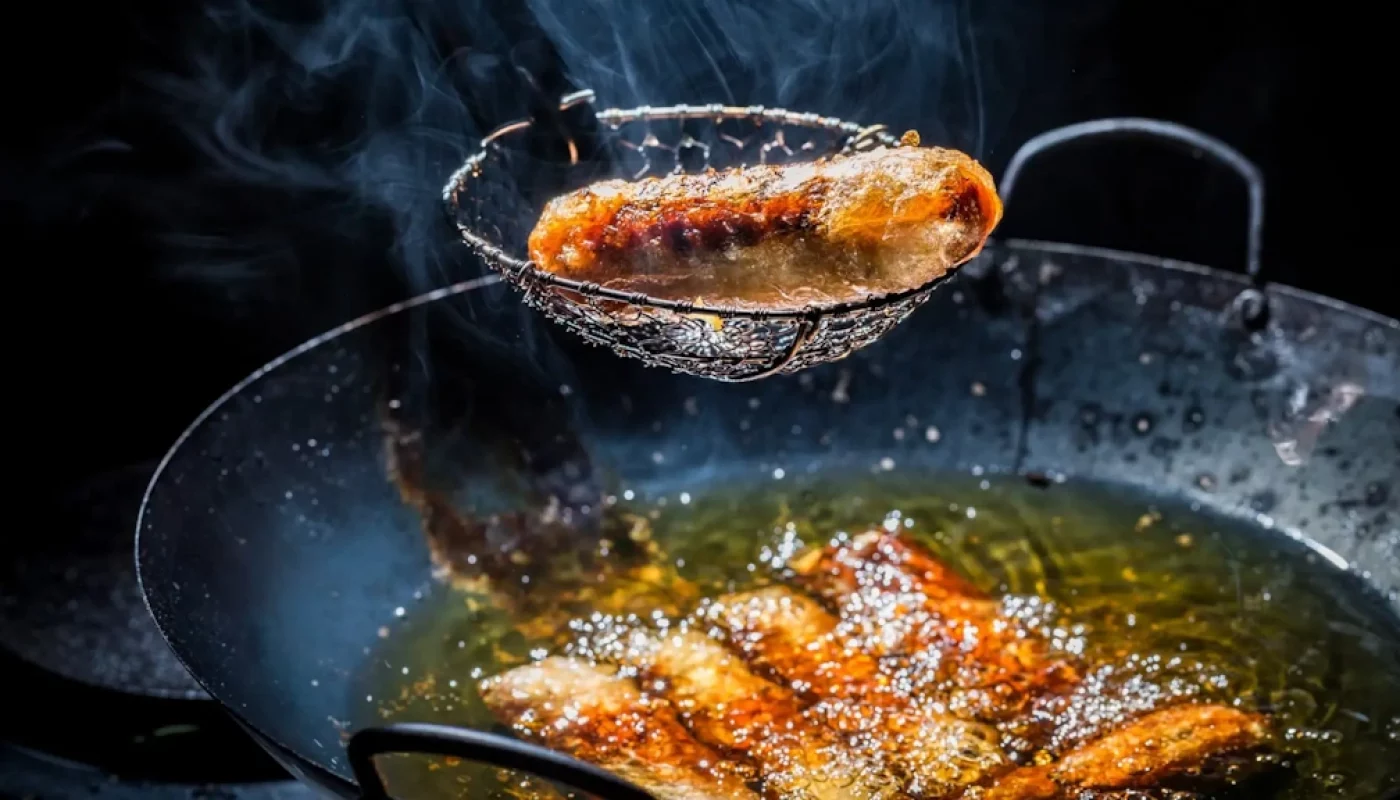
How does frying with EVOO improve the nutritional value of food?
The habit of frying with olive oil has been a topic of debate for decades, fueled by the myth that high temperatures degrade its healthy properties and turn it into a wellness risk. However, a recent scientific study published in the journal Foods by Chilean researchers debunks this popular belief, proving that this ingredient not only withstands heat but can also positively transform the nutritional value of food.
? Buy direct from the oil mill at the best price!
Buy Extra Virgin Olive Oil from Spain
Get maximum quality with maximum savings: a premium EVOO from Toledo featuring the unique character of the Cornicabra variety, guaranteed freshness, and gourmet purity direct from the source.

Marina Palusci L’Uomo di Ferro 3L, Early Harvest Selection with Exclusive Discount!
The research focused on analyzing how different vegetables react when cooked with extra virgin olive oil (EVOO) using three distinct methods: deep frying, oven baking, and the air fryer.
The results revealed a surprising fact: as long as the temperature does not exceed 190°C (374°F), olive oil keeps its phenolic compounds and antioxidants intact. When frying with olive oil or using it in hot air cooking, the oil acts as a vehicle that transfers monounsaturated fatty acids to the food, improving its lipid profile and facilitating the absorption of essential vitamins such as A, D, E, and K, which require fat to be assimilated by the body.
The study used vegetable galettes for testing, and tasters confirmed that those prepared with EVOO were not only nutritionally superior, but also visually more appealing, crispier, and noticeably tastier than those cooked without it.
This finding is crucial for home cooking, as it confirms that the smoke point of EVOO is high enough to allow for safe cooking techniques. Therefore, frying with olive oil over medium heat or using it to brush food before placing it in the air fryer is a smart strategy that combines gastronomic pleasure with cardiovascular protection.
How many times can olive oil be reused?
The key lies in avoiding extreme overheating; by maintaining temperature control, EVOO establishes itself as the most stable and healthy fat for any type of thermal transformation in the kitchen, permanently banishing the idea that it should be reserved exclusively for raw dressings to benefit from its properties.
Reusing olive oil is a safe and economical practice backed by science, gastronomy, and nutrition, thanks to its high thermal stability compared to other fats. Although laboratories and scientific studies indicate that stable varieties can withstand dozens of frying cycles without exceeding legal degradation limits, experts in home cooking recommend limiting its use to a range of 3 to 5 times.
The exact number of times olive oil can be reused depends critically on the type of food cooked and temperature control. Foods that release high amounts of moisture or residues, such as breaded items and fish, accelerate oxidation and degrade the product faster than vegetables or potatoes.
To extend the lifespan of liquid gold without compromising health or flavor, the basic rules of conservation require filtering the oil after each use to remove burnt particles, preventing it from smoking or overheating, and storing it in closed containers protected from light and heat. If the oil appears dark in color, develops an off-odor, or foams, it must be discarded immediately.
What happens to EVOO when heated in a pan?
Heating olive oil? Absolutely! However, naturally cloudy olive oil should not be used for frying: the aromatic substances—that is, the signature flavor of this oil—evaporate when heated too much. If dealing with high-quality olive oil (EVOO – highest quality), you can use it for frying, braising, steaming, sauteing, and baking up to a maximum temperature of 190 degrees Celsius (374°F).
Olive oil is a healthy and flavorful cooking oil. However, here we explain what you should pay attention to when heating olive oil. Whether you are frying onions or seasoning a pasta sauce, you can use most olive oils.
As long as olive oil is boiled, simmered, or baked in a pot with foods containing water, it will hardly exceed 100°C (212°F).
You can even deep fry in olive oil, provided you use a temperature-controlled fryer set no higher than 180°C (356°F).
Be careful when frying: do not let the olive oil overheat. The reason for this is that olive oil can burn and lose both its good flavor and its health-promoting properties.
The smoke point of EVOO: What is the limit?
The so-called smoke point of olive oil is approximately 180°C (356°F). The higher the smoke point of an oil, the more suitable it is for frying. Above this temperature, the oil burns, producing harmful and sometimes carcinogenic byproducts, such as toxic acrolein.
If olive oil is absolutely necessary, only refined olive oil—chemically extracted and hot-pressed—is suitable for high-heat searing. It is heat-resistant up to temperatures of 220°C (428°F). However, during hot pressing, much of the oil’s aroma and health benefits are lost.
Nevertheless, in a study published in June 2018, Australian researchers compared the effects of heating EVOO against a variety of other common cooking oils as well as refined olive oil. They discovered that EVOO is the safest and most stable option, even at high temperatures.
Incidentally, the smoke point in the EVOO study was around 207°C (405°F), practically identical to that of refined olive oil (208°C / 406°F). The reason virgin olive oil is the best fat for high-heat cooking is its polyphenol content. They are not only healthy for humans, but also protect the oil from aggressive free fatty radicals.
Frying with EVOO: Does it lose its health properties when cooked?
In Mediterranean countries, EVOO is also used for cooking and frying because it is relatively heat-resistant. This is due to its high monounsaturated fatty acid content, which is far more stable than polyunsaturated fatty acids.
Olive oil consists of only about 10% polyunsaturated fatty acids. This results in strong stability even at high temperatures.
It also contains many plant antioxidants that reduce thermal stress. These protective substances, as their name suggests, counteract oil oxidation and thereby increase its thermal stability.
EVOO released fewer pollutants during frying and deep frying than the sunflower oil used in the comparison. Interestingly, virgin olive oil is unstable in the microwave: for reasons still unknown, all of its valuable ingredients are rapidly lost.
All oil undergoes a breakdown process due to the effects of oxygen, light, and heat. High frying temperatures accelerate this oxidation process. The term “cold-pressed” is outdated. Olive oil may be too expensive to heat, but it is never too low in quality. The higher the quality of the product, the more antioxidants and fewer free fatty acids it will contain. Olive oil is actually highly recommended for frying.
The myth that olive oil becomes toxic as soon as it starts to “smoke” is untrue. Australian researchers finally clarified this in 2018. Different vegetable oils were tested, including cold-pressed olive oil (extra virgin), refined olive oil, and virgin olive oil. The study found no toxic substances.
EVOO is the most stable oil when heated. Their study shows that after six hours of heating at 180 degrees Celsius (356°F), olive oil still retains the highest amount of unsaturated fatty acids, which are considered very healthy. Olive oil contains very low levels of trans fats, which are harmful to health and potentially carcinogenic.
Unlike canola oil, researchers recorded a 25-fold lower proportion of trans fats in heated olive oil.
? Looking for authentic EVOO, rich in natural antioxidants for your health? Direct from the mill to your table.

So why do many top chefs advise against frying with olive oil? On one hand, virgin olive oil contains many valuable health-promoting ingredients, such as polyphenol antioxidants, which break down at high temperatures.
On the other hand, high heat also alters the unique flavor profile of expensive olive oil. While making veal schnitzel with olive oil might be a waste of premium oil, it is certainly not toxic. The better the olive oil, the more suitable it is for heating.