

Why Does the Design of This New EVOO Packaging Protect Its Gourmet Quality?
A research group called Olicomp3D, composed of Andaltec, the Universities of Jaén and Cádiz, the company Matersia, and the Sierra Mágina Designation of Origin, has achieved a significant breakthrough in the development of sustainable packaging. They have succeeded in creating an innovative material for Extra Virgin Olive Oil (EVOO) bottles using olive pruning waste and olive pits. This new material is combined with a polymeric base and manufactured using 3D printing, a technique known as large-format additive manufacturing.
? Exclusive prices direct from the oil mill!
Buy Extra Virgin Olive Oil from Spain
Get the highest quality at the most competitive price: a high-mountain gourmet EVOO from Jaén, certified freshness, and an exceptional green fruitiness.
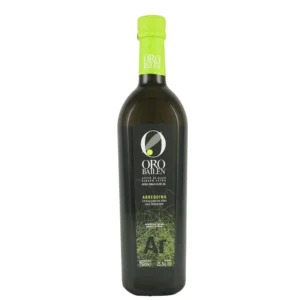
Oro Bailen Reserva Familiar Arbequina 750ML, Special Edition on Sale!
A Project with Sustainable Roots
The Olicomp3D project set out to revalue olive grove waste, a key sector in Andalusia. The idea was to transform pruning wood and olive pits, which are normally considered waste, into a valuable resource for creating packaging.
The presentation of the Olicomp3D results took place recently at the Andaltec headquarters. At this event, representatives from each of the collaborating entities highlighted the importance of this project, which received funding from the Department of Agriculture, Fisheries, Water and Rural Development of the Regional Government of Andalusia.
Daniel Aguilera, general manager of Andaltec, emphasized the consortium’s interest in taking advantage of olive grove waste to produce eco-friendly packaging within the sector itself. Fran Navas, a researcher at Andaltec, explained that the project lasted two years and expressed hope to continue exploring this research line in future working groups.
Jesús Sutil, manager of the Sierra Mágina Designation of Origin, for whose promotional bottle this packaging was designed, emphasized that this packaging goes beyond a simple design. For him, it represents a clear commitment to the circular economy and sustainability, integrating the values inherent to the land. These innovative cases have already been exhibited at major national fairs such as Salón Gourmet in Madrid, Salimat in Galicia, and Expoliva in Jaén.
From European Research to New Applications
The development of this new material has its origins in the European Life Compolive project, led by the University of Jaén and Andaltec. At that time, the use of olive grove waste as natural reinforcement in polymers was investigated, offering an alternative to synthetic reinforcements. These materials are attractive due to their lower density, lower cost, and because they are inherently biodegradable, facilitating disposal.
The Life Compolive project focused on applications for the automotive and furniture sectors, demonstrating the technical feasibility of these developments. With Olicomp3D, the focus shifted to the packaging sector, utilizing more modern manufacturing processes such as large-scale additive manufacturing (FGF). It is worth noting that other partners of the Operational Group, the University of Cádiz and the company Matersia S.L., had already used this manufacturing system to produce plastic parts from cork waste.
Impact and Key Benefits
This project is fundamental for the olive sector. Its benefits are manifold:
- Reduction of environmental impact: By reusing waste, the amount of refuse generated by olive groves is reduced.
- Waste revaluation: A new value is given to an abundant material in Andalusia that would otherwise go unused.
- Circular economy model: The project creates a cycle where waste is transformed into new products, aligning with the principles of the circular economy.
- Increased competitiveness: Innovative materials are generated from local resources, which can boost the competitiveness of the Andalusian economy.
In addition, Olicomp3D contributes directly to fulfilling the Sustainable Development Goals (SDGs) of the 2030 Agenda. By using waste that currently releases greenhouse gases and reducing reliance on fossil-based plastics, the project promotes sustainable products and the creation of new business models in rural areas. It aligns specifically with SDGs such as Decent Work and Economic Growth, Industry, Innovation and Infrastructure, Sustainable Cities and Communities, Responsible Consumption and Production, and Climate Action.
? Looking for authentic EVOO, rich in natural antioxidants for your health? Direct from the oil mill to your table.

The project was funded by European Agricultural Funds for Rural Development (EAFRD) and the Regional Government of Andalusia, through the 2020 call for the Operation of Regional Operational Groups of the European Innovation Partnership for Agricultural Productivity and Sustainability (EIP AGRI).
Andaltec is a technology center founded in 2003, specializing in automotive lighting systems, food-contact plastics, prototyping, and sustainable plastic materials. It features a team of over 120 professionals and a 10,000-square-meter facility in Martos, serving companies in more than 20 countries.
Paper Bottles for Olive Oil
The use of paper bottles for olive oil marks a milestone in the food industry, presenting itself as a revolutionary alternative that benefits both consumers and the environment.
This innovation, led by companies such as Enia Foods with its brand AEONS and Jordan Olive Oil, is based on Frugal Bottle technology—a packaging format designed to transform the way we transport and preserve liquid gold.
Unlike traditional containers, paper bottles for olive oil are made from 94% recycled cardboard and are up to five times lighter than glass, drastically reducing carbon emissions during logistics.
Improving EVOO Preservation
Inside, they feature a protective collapsible pouch that prevents oxygen from entering as the product is used, eliminating the empty headspace that typically causes oxidation in conventional bottles and thus preserving the antioxidants and polyphenols of extra virgin olive oil for much longer. Additionally, this format is highly practical: it pours with the same ease as a glass bottle, but it is shatterproof and much easier to recycle, as the consumer only needs to separate the inner pouch from the paper exterior.
Recognized with international awards such as the Grand Prix at SIAL Innovation, these paper bottles for olive oil prove that it is possible to advance toward sustainability without sacrificing quality or food safety, complying with the strictest EU and FDA regulations.
By choosing paper bottles for olive oil, producers not only respond to the demand of a public increasingly conscious of the planet, but also protect the purity and flavor of the product superiorly compared to traditional steel or plastic. This advancement represents a logical step for the agricultural sector, uniting the heritage of olive groves with 21st-century packaging solutions that minimize the ecological footprint.
Ultimately, paper bottles for olive oil do not change the essence of the oil, but they change everything around it, making the consumption of this healthy food an experience aligned with a responsible and modern lifestyle.