
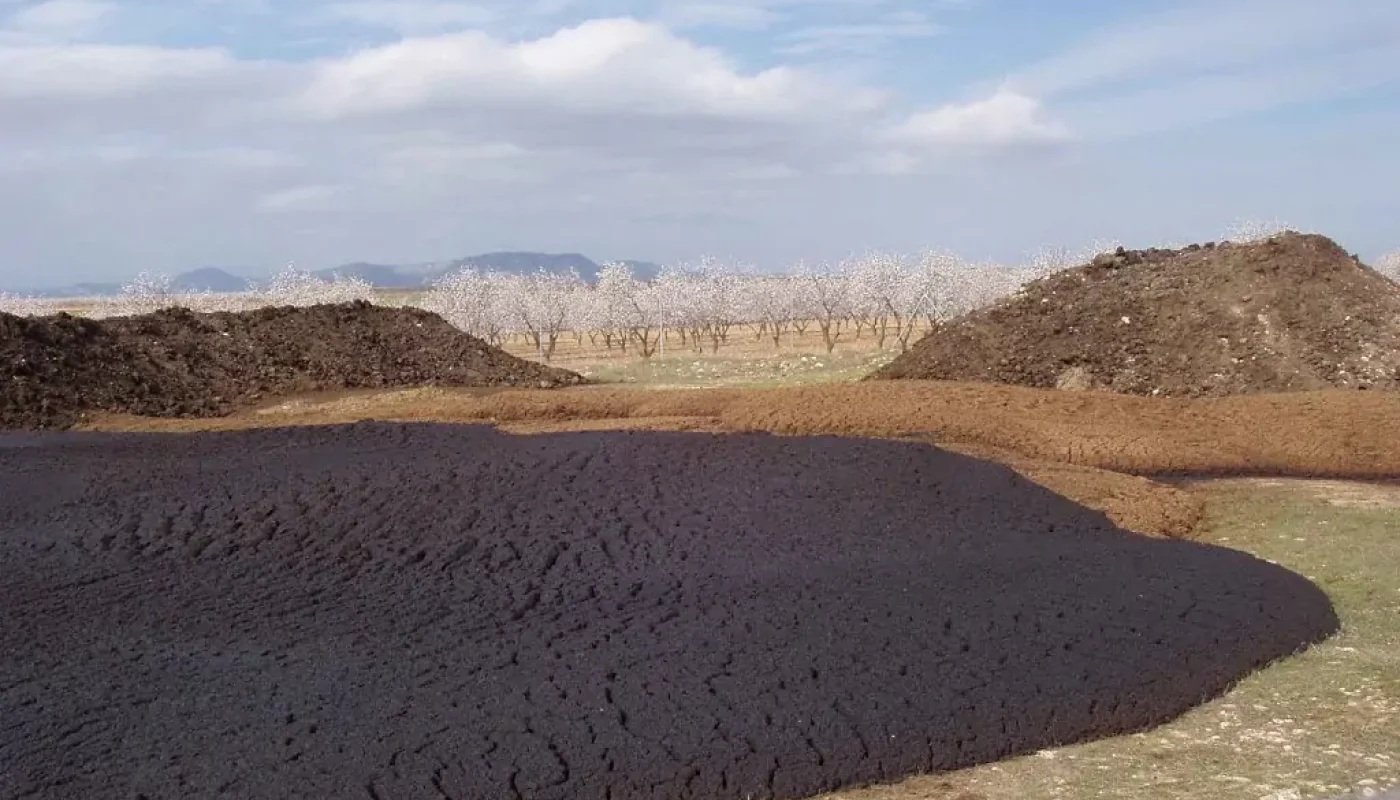
Tunisian Innovation to Valorize EVOO Waste
Tunisia, aware of the environmental challenge posed by the by-products of its vast olive-growing sector, is making a firm commitment to research and innovation to transform a traditional activity into a driver of sustainable and competitive development. This nation, a world leader in the export of organic olive oil, has identified the valorization of olive oil production waste as a key strategy.
? Enjoy authentic flavor at the best price straight from the mill!
Buy Extra Virgin Olive Oil from Croatia
Bring high-mountain gourmet EVOO to your table, certified for its unmatched freshness and characterized by an extraordinary green fruitiness that will captivate your senses.
Discover Cadenela Organic For Kids, Special Edition on Sale!
The Euro-Mediterranean OLIWA Project
A central piece in this effort is Tunisia’s participation in the Euro-Mediterranean project OLIWA, funded by the European Union. The primary goal of this pan-European program is to convert the voluminous waste from olive oil production into high value-added products.
Coordinated by the University of Turin, OLIWA brings together six Mediterranean countries (Italy, Spain, Greece, Turkey, Algeria, and Tunisia) and a total of 25 institutional and technological partners, demonstrating a regional commitment to the circular economy. The intention is to transcend the current agricultural model, which generates large amounts of waste, toward a system where olive mill wastewater (margines) and other olive by-products, historically seen as polluting and difficult to manage, are reused in a creative and innovative way.
How Is Innovation Transforming EVOO Waste into Valuable Resources?
The OLIWA project opens up a range of possibilities for reusing this waste, bringing it to various sectors:
- Animal Feed and Aquaculture: Olive waste is expected to be used as a substrate for insect farming, which in turn would be processed into meal for animal feed. This not only provides a sustainable protein source but also reduces dependence on other resources.
- Food Additives: One of the high-value pathways is the extraction of natural compounds present in the waste. These components can be used as additives in the food industry, taking advantage of their beneficial properties.
- Sustainable Materials: The project also contemplates the manufacturing of durable packaging materials from this waste, a line of research actively involving the Spanish technological center AIMPLAS, which specializes in polymers.
- Energy and Biogas: The goal is to produce biogas by combining agricultural waste, including olive waste. This is a way to generate renewable energy from what was previously a management problem.
Strategic Impact for Tunisia
For Tunisia, a country with a strong olive-growing identity, the OLIWA project and its innovative approaches are of strategic importance. They directly address the environmental challenges generated by the industry and simultaneously open up new economic prospects in green and innovative sectors.
The regional goal, supported by partners like AIMPLAS, is ambitious: reduce food waste by 25% and strengthen sustainable value chains throughout the Mediterranean basin. By investing in these technologies, Tunisia not only solves a pollution problem but also reaffirms its commitment to transforming its traditional olive oil industry into a powerful economic engine that is competitive and aligned with sustainability principles. This approach places the country at the forefront of agricultural waste valorization.
? Looking for authentic EVOO rich in natural antioxidants for your health? Straight from the mill to your table.

Innovation in Olive Pomace Management
A team of Andalusian researchers from the University of Granada and the Instituto de la Grasa has developed an innovative electricity-based system to transform olive pomace (alperujo), a massive waste product from olive oil production, into high-value industrial resources.
Application of Electrodialysis
Using the technique of electrodialysis, which acts as a selective filter driven by electric current, the scientists managed to directly separate and concentrate volatile fatty acids from a real fermented mixture of olive pomace, achieving a recovery rate of 55%.
Technical Advantages over Traditional Methods
This process stands out for its high energy efficiency, reaching an electrical current efficiency of 86%. Unlike distillation or the use of chemical resins, this technology relies solely on selective membranes, which significantly reduces energy consumption and simplifies industrial scaling.
New Opportunities for the Olive Sector
The recovered raw materials can be used in the manufacturing of bioplastics, cosmetics, hygiene, and cleaning products. This technology opens the door to converting olive mills into biorefineries, providing valuable economic benefit and boosting the sustainability of the sector.